

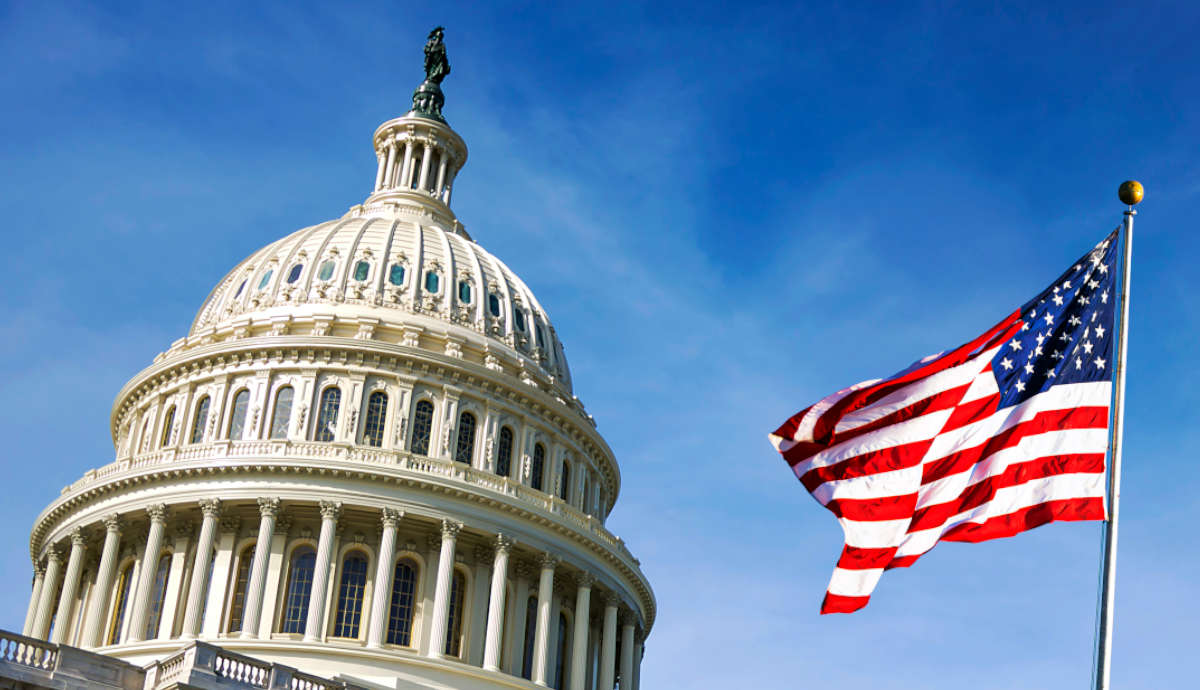
The United States Senate Commerce Subcommittee on Consumer Protection, Technology, and Data Privacy has scheduled a landmark hearing for Wednesday, May 20, that will mark the first time any Senate body has directly addressed the proliferation of prediction markets and their intersection with professional and amateur sports wagering in America.
Subcommittee Chair Senator Marsha Blackburn announced the hearing, titled “No Sure Bets: Protecting Sports Integrity in America,” framing it as a direct response to a string of match-fixing and insider betting scandals that have touched the NBA, MLB, UFC, MLS, and NCAA over the past 18 months.
The hearing’s witness list reflects the genuine complexity of the policy debate rather than a predetermined outcome. Bill Miller, president and CEO of the American Gaming Association, will represent the mainstream licensed sportsbook industry. Mary Beth Thomas, executive director of the Tennessee Sports Wagering Council, brings a state-level regulatory perspective.
Scott Sadin, co-founder of Integrity Compliance 360, the firm that has flagged suspicious betting activity in several of last year’s highest-profile cases, provides the enforcement and detection dimension. Former Congressman Patrick McHenry, now a senior advisor to the Coalition for Prediction Markets, completes a panel that gives the prediction market industry a direct voice in proceedings rather than treating it as an entity to be managed or restricted before being heard.
Blackburn said in her announcement that “fair play is the foundation of American sports, but recent match-fixing scandals in professional sports have put a spotlight on the risks facing the integrity of competition.” Senator Ted Cruz, who chairs the full Commerce Committee and whose framing of the issue has been influential, put the stakes in consumer terms, stating:
“Fans shouldn’t have to wonder if their favourite player missed a buzzer-beater or dropped a touchdown pass because of a secret bet. Unfortunately, recent episodes have planted that seed of doubt and raised questions about whether changes are necessary to integrity in sports.”
The specific case history driving the urgency is substantial. Twenty individuals were indicted this year for roles in a point-shaving scheme that bribed 39 NCAA athletes across more than 17 Division I teams, fixing no fewer than 29 games. Federal prosecutors separately indicted two MLB pitchers in November 2025 on accusations of manipulating pitches to benefit bettors. Miami Heat guard Terry Rozier was arrested in October 2025, accused of faking an injury to exit a game early so that player prop bettors could collect. The cumulative weight of those incidents has shifted the political calculation in Washington from passive monitoring to active oversight.
The US sports betting market has expanded into a $165 billion industry operating across 39 states and Washington DC since the Supreme Court struck down the Professional and Amateur Sports Protection Act in 2018. Prediction market platforms including Kalshi and Polymarket have grown alongside traditional sportsbooks, operating under a regulatory classification that treats them as financial instruments subject to CFTC oversight rather than state gambling licences. That distinction has allowed prediction platforms to operate in states where traditional sportsbooks are not licensed, creating a jurisdictional gap that both the AGA and several sports leagues have pressed Congress to address.
The AGA spent $730,000 on lobbying in the first quarter of 2026 alone, its highest single-quarter total in at least a year, with disclosure filings specifically covering sports betting integrity, the Event Contract Enforcement Act, and what the industry has named the Prediction Markets are Gambling Act. Major League Baseball has spent $310,000 per quarter consistently and contributed to the campaign funds of multiple committee members. That lobbying footprint tells a story about where the industry sees the real commercial threat: not in match-fixing itself but in the regulatory reclassification of prediction markets that could directly challenge licensed sportsbooks’ exclusive right to offer wagering-like products to American consumers.
Senators voted unanimously in late April to ban themselves and their staff from participating in prediction markets, a conflict-of-interest safeguard that simultaneously signalled Congress views these platforms as a category warranting serious regulatory attention. Whatever the hearing produces in terms of policy momentum, the industry’s message to all participants is clear: what is decided, or not decided, in the weeks that follow will define how a $165 billion market is governed for the rest of the decade.
