


One of the most frequently asked questions among new casino players concerns the mechanics of card collection during a hand, and the question of whether you are allowed more than 2 cards in blackjack is one with a nuanced answer that depends entirely on which rules apply at the specific table being played.
The core answer is yes — in the vast majority of blackjack games, players are entirely permitted to receive as many additional cards as they wish during a single hand, provided they have not busted by exceeding a total of 21 and have not chosen to stand, double down, or split.
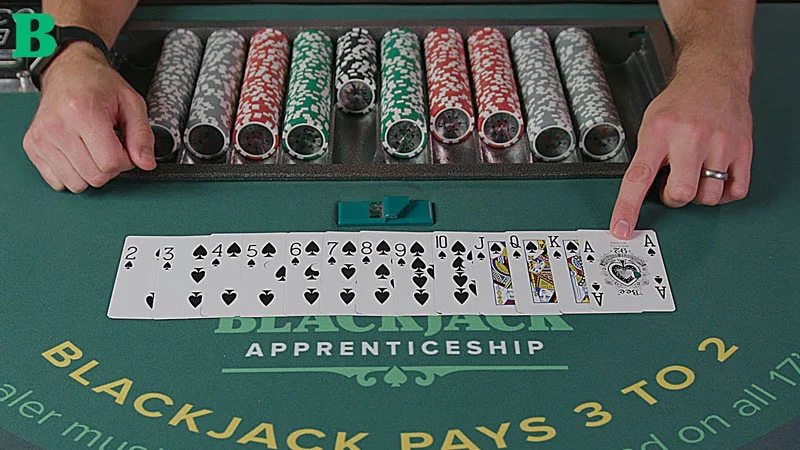
Are You Allowed More Than 2 Cards In Blackjack In Standard Play
Standard blackjack begins with each player receiving two cards face up and the dealer receiving one face up and one face down, and from that starting position the player can choose to hit, stand, double down, or split, with the hit option allowing the collection of additional cards without any numerical limit.
The only situations in which a player’s ability to collect extra cards becomes restricted relate specifically to splitting and doubling down, both of which impose conditions on how many additional cards may follow the initial move.
Card Collection Rules In Blackjack By Action
| Player Action | Cards Received | Further Hits Allowed? |
|---|---|---|
| Hit | 1 additional card | Yes, unlimited |
| Stand | None | No |
| Double Down | 1 additional card only | No |
| Split (non-Aces) | 1 card to each new hand, then hit freely | Yes |
| Split Aces | 1 card to each Ace only | No (in most games) |
| Bust (over 21) | Play ends immediately | No |
Split Rules By Casino Type
| Rule | Standard Casino | Some Variations |
|---|---|---|
| Split eligible pairs | Same value only | Any two 10-value cards |
| Re-splitting allowed | Usually up to 3 or 4 total hands | May be prohibited |
| Doubling after split (DAS) | Table dependent | Allowed in many games |
| Hitting after split Aces | Not permitted | Rare exceptions exist |
| Number of times re-split allowed | Usually 1–3 additional splits | Varies |
Splitting, Re-Splitting And The Multi-Card Hand
When a player receives an initial pair of identical-value cards, most casinos permit splitting those cards into two independent hands, each of which then receives a second card and can be played in full, with the player free to hit as many times as desired on non-Ace split hands until they stand, bust, or choose to double down.
Re-splitting is the process of splitting again when a newly dealt card forms another pair on one of the already-split hands, and most standard blackjack tables permit this up to a maximum of three or four total hands before further splitting is prohibited, though individual casino rules vary and should always be checked on the table placard.
The exception that catches many players off guard is split Aces, where virtually all casino games restrict the player to receiving only one additional card per Ace after the split, and no further hitting is permitted regardless of the total produced, meaning a player who draws a six to their split Ace to make seventeen cannot then take another card to try for a higher total.
Doubling down restricts the player to exactly one additional card on the doubled hand, after which the hand is locked and the dealer settles the bet, and this rule applies universally whether the player chose to double on a starting hand or doubled after splitting a pair.
When Multiple Cards Genuinely Help The Player
| Scenario | Recommended Action | Cards Involved |
|---|---|---|
| Soft total of 12–17 (Ace + low card) | Hit repeatedly | 3 or more possible |
| Hard 8 or 9 against dealer low card | Hit or double | 3 or more if hitting |
| Hard 12–16 vs dealer strong upcard | Hit | Potentially 4 or 5 |
| Five-card 21 (in Super Fun 21 variant) | Stand | Exactly 5 |
Some blackjack variants, most notably Super Fun 21 and some online Blackjack games, introduce a bonus payout specifically for building a hand of 21 across five or more cards, which incentivises players to keep hitting on low totals in pursuit of the bonus prize, representing one of the clearest examples of a casino rule that actively rewards the collection of multiple cards rather than treating it as a last resort.
The dealer is not permitted to split or double under any circumstances, and must instead follow a fixed drawing rule that typically requires hitting on any total of 16 or below and standing on any total of 17 or above, meaning the dealer’s hand can also consist of five, six, or theoretically even more cards before they either stand or bust, with no upper limit on the number of cards in play.
